

Frequently Asked Questions
This page contains answers to frequently asked questions about segregation and about this interactive exercise.
Q: What is the definition of segregation?
Segregation is the separation of social groups by race, class, ethnicity, gender, or other recognizable characteristics. Residential segregation refers to segregation in housing, whereas school segregation refers to group differences in access to educational facilities.
Q: How is segregation measured?
In a set of groundbreaking studies on segregation, Douglas Massey and Nancy Denton identified 20 different ways to measure segregation, and they grouped these measures into five main dimensions that have since been used by the U.S. Census Bureau. According to the Bureau:
… evenness involves the differential distribution of the subject population, exposure measures potential contact, concentration refers to the relative amount of physical space occupied, centralization indicates the degree to which a group is located near the center of an urban area, and clustering measures the degree to which minority group members live disproportionately in contiguous areas.

These five dimensions represent the most common indices of segregation.
Q: Is segregation always bad?
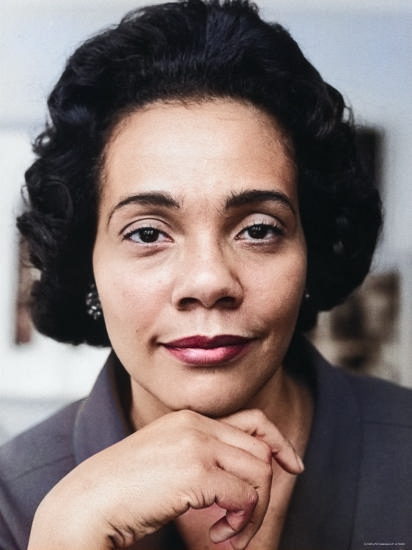
Segregation was wrong when it was forced by white people, and I believe it is still wrong when it is requested by black people.
– Civil rights leader Coretta Scott King
The answer to this question is a matter of opinion, context, and culture. In the U.S., women and minority members occasionally choose to live, work, or study in a self-segregated environment, but more often segregation has served to reinforce social inequality. The U.S. Supreme Court ruled, for example, in its 1954 landmark decision Brown v. Board of Education:
segregation of children in public schools solely on the basis of race … [deprives] children of the minority group of equal education opportunities.
A working assumption of the exercise on this website is that integration is generally more desirable than segregation.
Q: Which racial group in the U.S. is the most segregated in housing?
Before I built a wall I’d ask to know
What I was walling in or walling out,
And to whom I was like to give offense.
– Robert Frost (from Mending Wall)

Segregation is often presented as a characteristic of minority populations such as Black people in inner cities, Native people on reservations, or Asian people in urban areas (e.g., Chinatown). When it comes to intergroup contact, however, the most racially segregated Americans tend to be White. Just as Black Africans are more likely than other Africans to go through their day seeing only Black people (due to the predominance of Black people in Africa), White Americans are more likely than other Americans to see only White people.
Q: Which U.S. cities are the most segregated residentially?
| Most Segregated U.S. Cities | |
| 1 | Milwaukee, Wisconsin |
| 2 | New York City, New York |
| 3 | Chicago, Illinois |
| 4 | Cleveland, Ohio |
| 5 | Detroit, Michigan |
| 6 | St. Louis, Missouri |
| 7 | Buffalo, New York |
| 8 | Philadelphia, Pennsylvania |
| 9 | Cincinnati, Ohio |
| 10 | Pittsburgh, Pennsylvania |
In the United States, racial segregation in housing is more pronounced in the North than the South.
Here, for instance, are the ten most segregated U.S. cities with a population over a million, according to a 2022 Brookings Institution analysis (using a Black-White dissimilarity index based on U.S. Census data).
| Most Segregated U.S. Cities | |
| 1 | Milwaukee, Wisconsin |
| 2 | New York City, New York |
| 3 | Chicago, Illinois |
| 4 | Cleveland, Ohio |
| 5 | Detroit, Michigan |
| 6 | St. Louis, Missouri |
| 7 | Buffalo, New York |
| 8 | Philadelphia, Pennsylvania |
| 9 | Cincinnati, Ohio |
| 10 | Pittsburgh, Pennsylvania |
None of these cities are located in the South.
Q: Who conceived of this interactive exercise?
The exercise was conceived, designed, and written by Professor Scott Plous of Wesleyan University and was inspired by the work of Nobel Prize winning economist Thomas Schelling.
David Jensenius and Steven Farthing wrote the original programming code, Mike Lestik created the original graphic elements, Christine Kozin updated the programming code in 2026, Pragathi Ilango and Scott Plous updated the design in 2026, and several Social Psychology Network student interns provided other valuable assistance (most notably, Beau Anderson, Raissa Fernandes, Lucinda Gatsiounis, Rhea Kothari, Max Marinelli, Kara Nicholson, and Jennifer Spiller).
Q: Is this exercise available as software?
Not at this time. The exercise was developed specifically for UnderstandingPrejudice.org and is exclusively available on this website.
Q: How can I reach the web development team or report a problem with the site?
To reach the team or report a problem, please use this contact form:
http://www.understandingprejudice.org/contact/
Want to know more?

Other Resources on Segregation
A range of resources including websites and articles that provide additional perspectives on segregation.
Publications on Segregation
Browse selected books, articles, and reports that examine segregation and the work of Thomas Schelling.
Page 7 of 7