

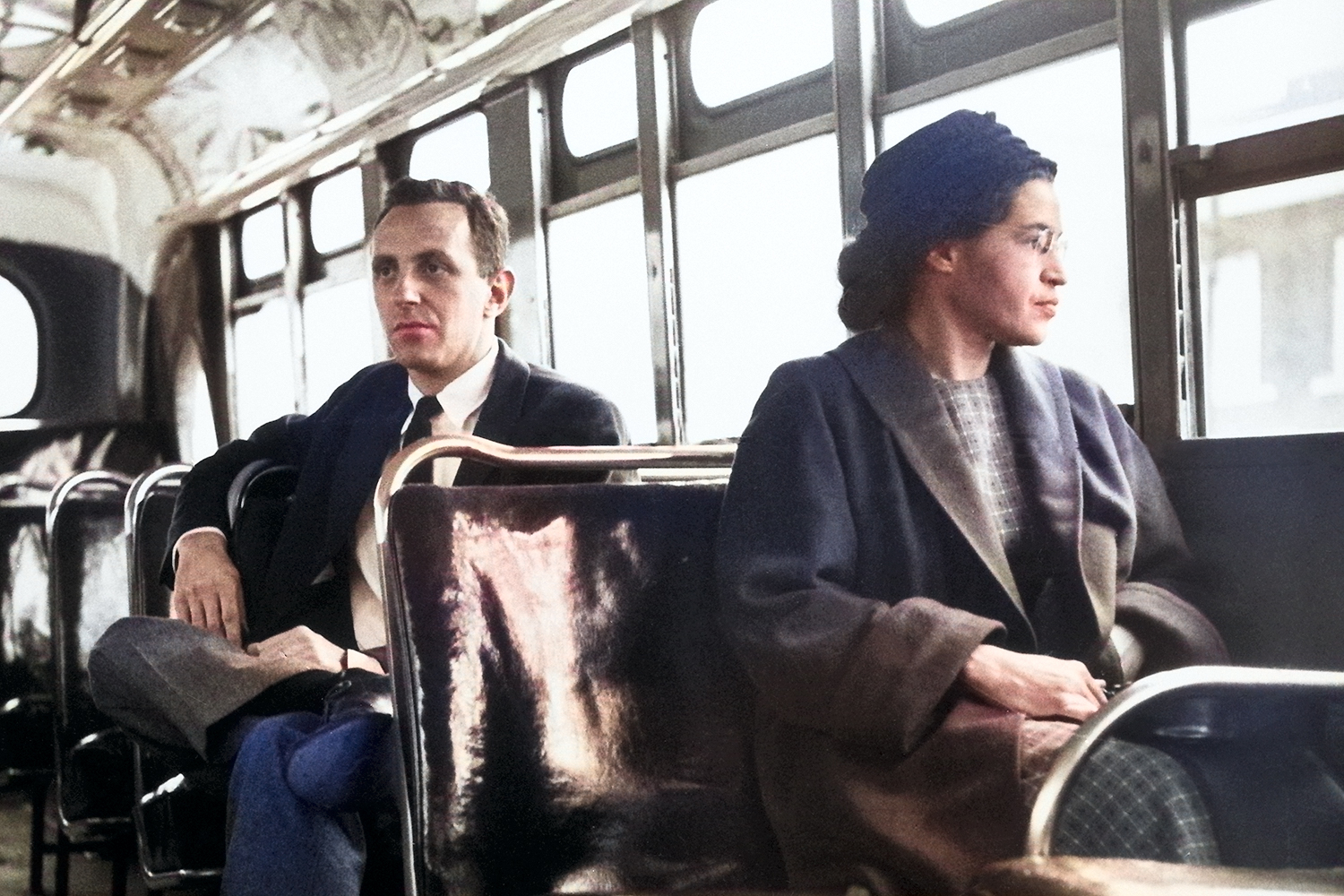
Segregation in Daily Life

Although this exercise involves green and blue pieces rather than social groups, it illustrates how our preferences can lead to unintentional segregation in daily life. This segregation occurs when we want to have at least a few same-group neighbors but don’t make an effort to have neighbors from other groups.
Of course, this result doesn’t mean that segregation is always accidental, or that it’s wrong to like members of one’s own group. Nor does it mean that segregation is unavoidable. On the contrary, segregation can be reduced simply by seeking neighbors from a different group.
To see this “reverse Schelling effect” in action, the next page shows what happens to a fully segregated community when each green piece prefers to have at least one blue neighbor, and each blue piece prefers to have at least one green neighbor. The results may surprise you…
Page 4 of 6